

.png)

Is an Ice Cream Business Profitable? The Real Math

A busy Saturday line can make an ice cream shop look like an easy win. A $6 cone may cost relatively little to produce, and sales can move quickly during warm weather. But is an ice cream business profitable? It can be, provided the owner controls the less-visible costs: labor, rent, utilities, waste, equipment repairs, and the slow months that follow peak season.
For owner-operators and multi-unit food-service teams, the answer is not simply about selling more scoops. It is about building an operation that can protect product quality, keep cold equipment running, and turn seasonal demand into dependable year-round cash flow.
Is an ice cream business profitable? It depends on the operating model
Ice cream can offer attractive gross margins. A scoop, sundae, shake, or packaged novelty often sells for far more than its ingredient cost. Add-ons such as cones, toppings, premium mix-ins, and beverages can improve the average ticket without adding much service time.
That does not automatically translate to high net profit. A walk-up seasonal stand has different economics than a full-service parlor, a mobile truck, a franchise, or a shop with a large indoor dining area. A small owner-operated location may keep labor costs lower but leave the owner covering every shift. A larger operation may generate more revenue, but it also carries more payroll, equipment, occupancy, and management expense.
Location matters just as much as product. A high-traffic site near parks, shopping districts, schools, entertainment venues, or family neighborhoods may support strong summer sales. The same site can become expensive quickly if rent is high and winter traffic falls away. Before signing a lease, operators need realistic sales projections for every month, not just the busiest weekends.
Revenue is driven by more than the scoop price
Most profitable shops make it easy for customers to spend more than the price of a basic cone. Specialty sundaes, shakes, flights, take-home pints, cakes, coffee, and branded desserts can raise the average check. Catering, birthday events, school partnerships, and wholesale sales to local restaurants or markets can also reduce reliance on walk-in traffic.
Menu discipline still matters. A large menu can create purchasing complexity, longer service times, and excess inventory. Offering every flavor, topping, and frozen drink may sound appealing, but slower-moving items can tie up freezer space and eventually become waste. The better approach is to track what sells, identify items with a healthy contribution margin, and rotate seasonal offerings with a clear plan.
Owners should also examine transaction volume. A shop selling 250 tickets per day at a $7 average check has a very different revenue profile than one selling 250 tickets at a $10 average check. Raising ticket value through thoughtful bundles can be more sustainable than trying to drive more traffic during already busy periods.
The costs that decide whether the shop makes money
Food cost is only one part of the equation. Dairy products, inclusions, cones, cups, lids, spoons, napkins, and delivery charges all need to be included when pricing a menu. Premium ingredients can justify premium pricing, but only when the customer experience supports it.
Labor is often the next major pressure point. Ice cream service may appear simple, yet peak periods require enough trained staff to keep lines moving, maintain clean stations, prepare orders accurately, and follow food-safety procedures. Overstaffing erodes profit during quiet hours. Understaffing can turn a good sales day into lost customers and poor reviews.
Rent, insurance, payment processing, marketing, permits, and taxes also add up. Franchise operators may have additional royalty and marketing fees. Mobile units may avoid storefront rent but face fuel, vehicle maintenance, event fees, weather exposure, and a limited service window.
A practical financial plan separates fixed costs from costs that rise with sales. Rent and many insurance costs stay relatively stable. Ingredients, packaging, credit card fees, and portions of labor increase as volume grows. Knowing that difference helps an operator calculate a break-even point: the sales level required each day or month before the business begins generating a profit.
Refrigeration is a profit center when it is reliable
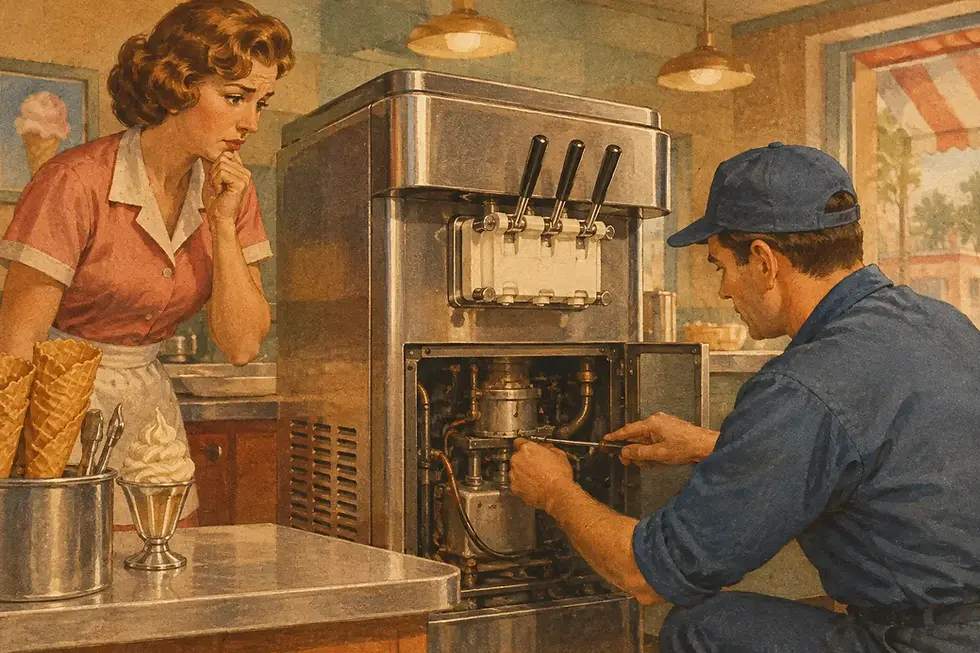
Ice cream operations depend on cold equipment more than many other food-service concepts. Hardening cabinets, dipping cabinets, walk-in freezers, reach-ins, blast freezers, display cases, ice machines, and HVAC systems all affect product quality and operating cost.
A freezer that runs too warm can damage product and create a food-safety concern. A unit that runs too cold, cycles excessively, or has worn door gaskets can drive up utility costs. A failed compressor or overnight temperature issue can mean lost inventory, cancelled orders, and an emergency repair at the worst possible time.
Preventive maintenance is not an optional line item for a business built around frozen product. Cleaning coils, checking refrigerant performance, inspecting electrical components, confirming door seals, and monitoring temperatures can help prevent a small issue from becoming a costly outage. Equipment should be sized for actual production and storage needs, not simply purchased based on the lowest upfront price.
Seasonality is the biggest test for many shops
In Southwest Ohio and across the tri-state area, ice cream demand can surge from late spring through early fall. A profitable July does not guarantee a profitable year. Owners need a plan for rain, heat waves, school schedules, holidays, and the sharp demand changes that colder weather can bring.
Some shops close seasonally, which can work well when the business has low fixed costs and the owner plans accordingly. Others stay open by adding coffee, baked goods, hot desserts, soups, or limited winter menus. Neither model is automatically better. The right choice depends on local demand, lease terms, staffing availability, and whether the facility can operate efficiently in every season.
Year-round operators should be especially careful with HVAC and refrigeration energy use. A comfortable dining area and stable freezer temperatures require systems that are maintained and properly controlled. Cutting service costs by delaying repairs can lead to higher utility bills, product loss, and customer disruption later.
How to improve the odds of profitability
The strongest operators treat profitability as an operating discipline, not a summer-time hope. They know their food cost by menu item, schedule labor to expected traffic, and review sales patterns often enough to make corrections before a problem becomes permanent.
They also protect margins through portion control. A small difference in scoop size, topping quantity, or shake ingredients can significantly affect cost when repeated thousands of times. Clear recipes, calibrated scoops, staff training, and regular inventory counts give managers better control without making the customer experience feel restrictive.
Pricing should be reviewed regularly. Ingredient, packaging, utility, and wage costs do not stay still. A modest, well-explained price adjustment is often healthier than allowing margins to disappear. Operators should also compare sales against waste. If a flavor or product line does not sell fast enough to justify freezer space and shrink, it may not belong on the menu.
Finally, build an equipment plan before an emergency forces the decision. Keep records of repair history, energy performance, and recurring service issues. Older equipment may still be serviceable, but repeated failures during peak season can cost more than a planned replacement. For facilities in the Cincinnati area, Otis Refrigeration can help operators maintain, repair, and plan commercial refrigeration and HVAC equipment around the demands of food-service operations.
Start with conservative numbers
An ice cream business can be profitable when the concept matches the location, menu, staffing plan, and seasonality of the market. The most useful first step is a conservative pro forma that assumes realistic traffic, includes winter or off-season performance, and sets aside money for maintenance and replacement.
A shop does not need perfect weather or record-breaking lines to succeed. It needs reliable equipment, disciplined costs, a menu that earns its space, and an operating plan that still works when the line is short.


Comments