

.png)
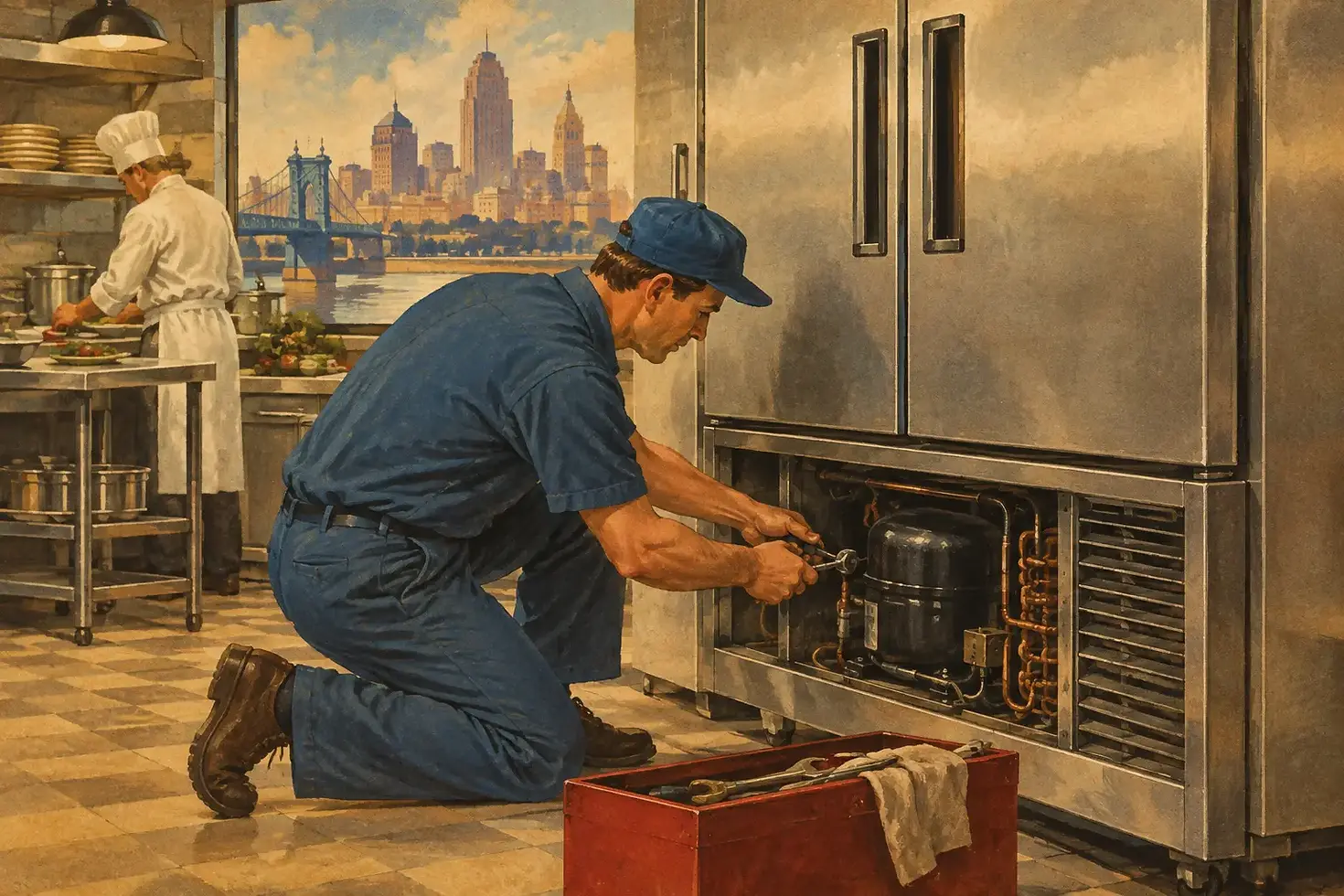
Emergency Commercial Refrigeration Repair Cincinnati

At 2:10 a.m., a walk-in cooler alarm is not a minor maintenance issue. It can mean thousands of dollars in exposed product, a delayed opening, a food-safety decision that cannot wait until morning, and a manager trying to find help while the temperature keeps climbing. Emergency commercial refrigeration repair Cincinnati businesses can depend on starts with a clear priority: stabilize the equipment, protect the product, and get the operation moving again.
For restaurants, hospitals, hotels, convenience stores, commissaries, and institutional kitchens across the Cincinnati tri-state area, refrigeration is revenue-producing equipment. When it fails, the right response is not simply to replace a part. It is to identify what caused the failure, make the repair correctly, and give the operator useful information about what comes next.
When a Refrigeration Failure Becomes an Emergency
Not every refrigeration concern requires an after-hours dispatch. A noisy condenser fan or a worn door gasket may be able to wait for a scheduled service visit if temperatures remain stable. A cooler that is warming, a freezer that will not hold temperature, or an ice machine that is creating a sanitation concern usually cannot.
The urgency depends on the equipment, the product inside it, and the operation it supports. A single reach-in unit may be manageable if there is safe backup storage available. A failed walk-in serving a busy restaurant, hospital kitchen, or multi-unit facility is a different situation. The same is true for a rack system, blast chiller, refrigerated prep table, display case, or beverage system that affects service during peak hours.
Watch for a rising cabinet temperature, an alarm that will not clear, unusual cycling, heavy frost, water around the unit, a breaker that repeatedly trips, or a compressor that is hot and not running. These symptoms do not all point to the same repair. They do signal that waiting without a plan can increase product loss and equipment damage.
What to Do Before the Technician Arrives
The best emergency call begins with a few calm, practical steps. First, confirm the actual temperature with a reliable thermometer rather than relying only on a display or alarm. Record the temperature, the time it was observed, and any recent changes in performance. This gives your team and the service technician a more accurate starting point.
Keep cooler and freezer doors closed as much as possible. Opening the door to check temperatures repeatedly adds heat and makes recovery harder. If safe backup refrigeration is available, move high-value or temperature-sensitive product according to your food-safety procedures. Avoid overloading another unit, since restricted airflow can create a second problem.
Do not reset breakers repeatedly, add refrigerant, chip ice from an evaporator with sharp tools, or bypass controls. Those actions can turn a component failure into a more costly repair or create a safety issue. If the equipment is leaking water near electrical connections, making a burning smell, or showing signs of electrical damage, isolate the area and communicate that condition when requesting service.
When you call, have the equipment make and model, asset location, current temperature, alarm code if shown, and a short description of the problem ready. A technician can use those details to arrive better prepared, especially when the failure involves a specialized unit or manufacturer-specific control.
Emergency Commercial Refrigeration Repair in Cincinnati: What a Complete Response Looks Like
An effective emergency repair process is built around diagnosis, not guesswork. A qualified technician should assess the immediate condition of the unit and then trace the failure through the system. Depending on the equipment, that may include checking electrical supply, controls, sensors, fan motors, defrost components, airflow, condenser condition, refrigerant circuit performance, and compressor operation.
A unit that is not cooling could have a failed fan motor, a dirty condenser, a control issue, a defrost failure, a refrigerant leak, or a compressor-related problem. Several of those issues can produce similar symptoms. Replacing the first suspect part without testing the system may restore operation briefly while leaving the original cause unresolved.
The first objective during an emergency is often to bring the box or cabinet back to a safe operating range. But a complete service response also explains the condition of the equipment in plain language. Facility teams need to know whether the repair is a durable correction, whether another component is nearing failure, and whether a follow-up visit or planned replacement should be considered.
Parts availability matters, too. Commercial kitchens and food-service facilities rely on equipment from many manufacturers, each with different controls and component requirements. Access to OEM parts, manufacturer support, and technicians trained across refrigeration systems can reduce delays and help ensure the repair fits the equipment rather than serving as a temporary workaround.
The Cost Question: Repair Now, Replace Later, or Replace Now?
During an emergency, the least expensive option is not always the lowest-cost decision. If a repair safely restores temperature control and the equipment has a reasonable service life remaining, repair is often the right call. A failed contactor, motor, sensor, or control component can be a straightforward correction on an otherwise dependable unit.
The decision becomes more complex when an older system has repeated failures, expensive compressor work, obsolete controls, declining energy performance, or refrigerant concerns. A repair may still be necessary to protect product immediately, but it can also be the right time to create a replacement plan rather than continue reacting to breakdowns.
For owner-operators, the key question is often, “Can we open tomorrow?” For facilities managers, it may be, “What is the operating risk across this location or portfolio?” Both questions are valid. A service partner should be able to address the immediate failure while providing the documentation and recommendations needed for a longer-term decision.
Why Preventive Maintenance Changes the Outcome
Emergency service is essential, but the most controllable refrigeration emergency is the one found before product temperatures rise. Condenser cleaning, coil inspection, drain maintenance, door and gasket checks, electrical testing, defrost verification, and temperature-control review all address problems that can quietly develop between breakdowns.
Maintenance intervals depend on the environment. A kitchen with heavy grease, flour, heat, or airborne debris may need more frequent condenser attention than a lightly used storage cooler. High-use walk-ins, ice machines, display cases, and equipment operating through long Cincinnati summers also deserve closer monitoring. There is no one schedule that fits every facility.
A well-managed preventive maintenance program does more than reduce emergency calls. It helps improve energy efficiency, extends component life, supports food-safety documentation, and gives decision-makers a clearer view of equipment condition. That makes budgeting more predictable and prevents replacement decisions from becoming midnight decisions.
Choosing a Service Partner for Critical Equipment
When refrigeration is down, response matters. So do experience, communication, and accountability after the immediate repair is complete. Look for a commercial contractor with 24/7 emergency availability, factory-trained technicians, access to OEM parts, and the capability to support more than one equipment category. A facility should not have to coordinate separate vendors for its walk-ins, ice machines, HVAC equipment, hot-food equipment, and kitchen systems when one experienced partner can manage the broader need.
Local knowledge also has practical value. Cincinnati-area operators deal with seasonal humidity, summer heat, winter conditions, varied building types, and demanding food-service schedules. A contractor familiar with the region and the operating realities of commercial kitchens can respond with the right sense of urgency and a clearer understanding of what downtime costs.
Otis Refrigeration has supported commercial facilities since 1935 with around-the-clock service, factory-trained expertise, and a full-service approach to HVAC/R and food-service equipment. That combination helps operators address the immediate issue without losing sight of reliability, efficiency, and the next operational decision.
A refrigeration emergency will always be disruptive, but it does not have to become a crisis that follows your operation for days. Keep accurate temperature records, protect product first, call for qualified help early, and use every service event to learn what your equipment needs before the next busy shift begins.


Comments